
Four Animators on Vulnerability, Catharsis, and Reinventing the Form
by Robby Gilbert
It’s easy to fall into creative fatigue when thinking about the state of animation today. Jobs are scarce, AI looms large, and the broader cultural climate hardly encourages optimism.
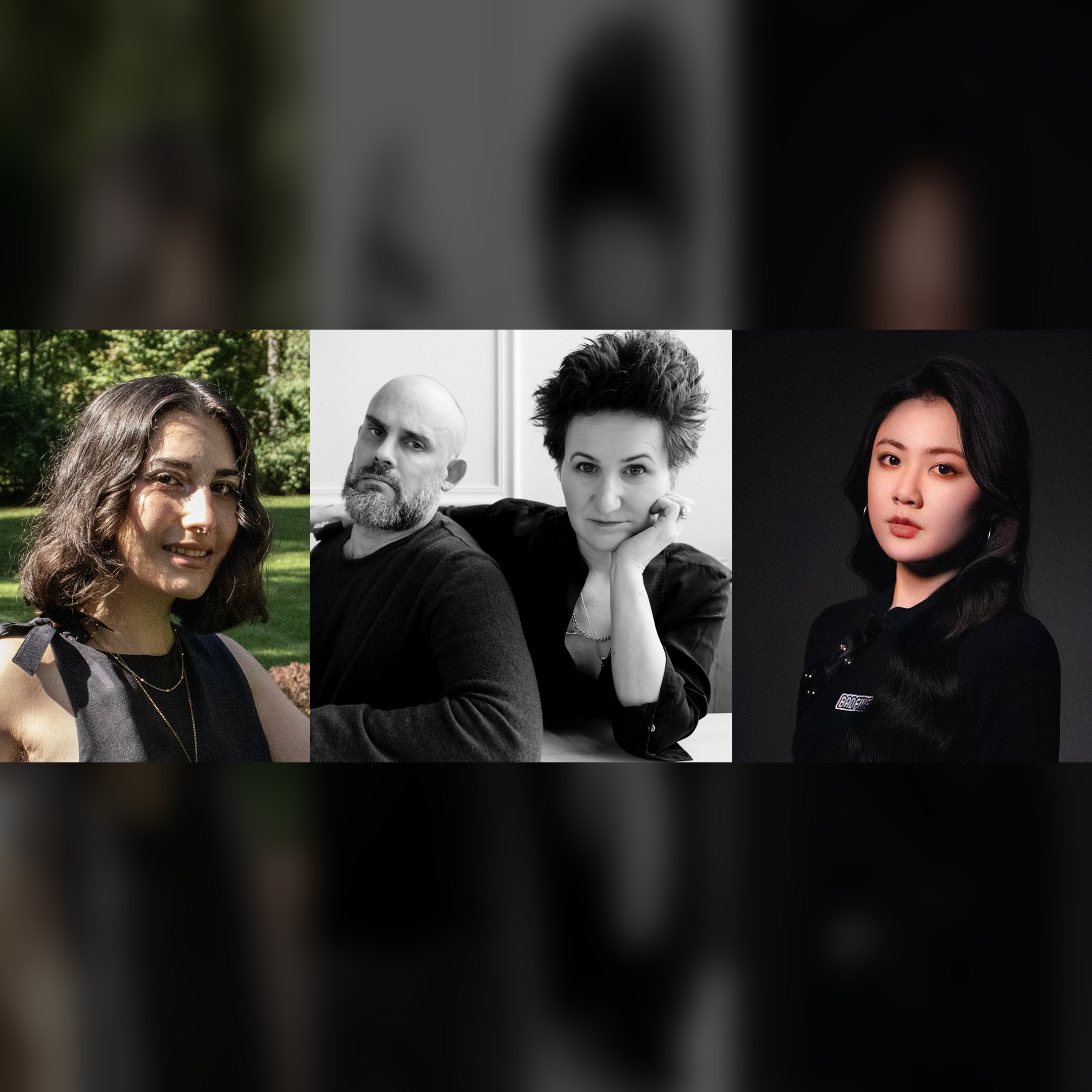
But this month, four animators offer a counterpoint. In conversations with Mulan Fu, Pilar Garcia-Fernandezesma, and the collaborative duo Andy and Carolyn London, one thing became clear: the future of animation is not something to wait for—it’s already being reimagined.
Across very different styles, these artists share a focus on the inner lives of their subjects, using animation to explore emotion and human connection with unusual depth. What stands out is not just their technical skill, but something harder to define—their work has soul.
Fragments into Form:
The Poetic Animations of Pilar Garcia-Fernandezesma

Pilar Garcia-Fernandezesma is a Spanish-American animator whose films transform personal experience into striking, emotionally resonant imagery. Her work is fearless.
Born and raised in New York, she attended LaGuardia High School and later earned her BFA from RISD. At RISD, she created Ciervo—a haunting film that merges the imagery of a hunted deer and a young woman to explore violence, submission, and transformation.
What began as a personal thesis project became something unexpected.
“Everything happened during lockdown,” Pilar recalls. “We were on Zoom, and Glen Keane appeared and announced that I had won the Gold Medal.”
The film earned her the Student Academy Award in 2020—an outcome she describes as surreal. More importantly, it became a catalyst. Her work began circulating through festivals, including Annecy, opening doors to new collaborations.
“It projected me into the animation world in a way I didn’t expect. Most of my work since has come through people seeing the film and reaching out.”
That trajectory has shaped a career rooted less in traditional industry pathways and more in independent, collaborative filmmaking. “I love working on films—the exchange of ideas, the back-and-forth. That’s what resonates with me.”
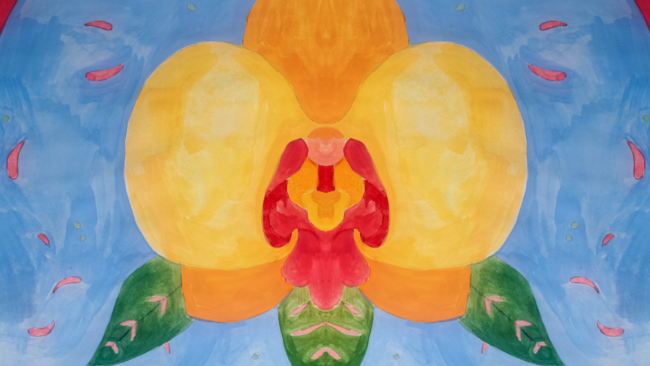
Pilar now teaches at SVA, where her approach reflects that same philosophy. Rather than focusing solely on technical skill, she challenges students to think more deeply about intent.
“Animation is so beautiful because you can do anything with it. But the real question is: why are you animating?”
“For many students, that question is difficult. At nineteen, identity is still forming, and the pressure to compare oneself to others—especially online—is intense.” “It takes effort to look inward,” she says. “And that can feel uncomfortable.”
Her advice is simple yet demanding: read, write, and live.
“You can’t write if you don’t do anything. Otherwise, you’ll just write about being in school—like everyone else does.”
That philosophy extends directly into her creative process. Pilar’s films don’t emerge from a single idea but from the accumulation of images, memories, and emotional fragments.
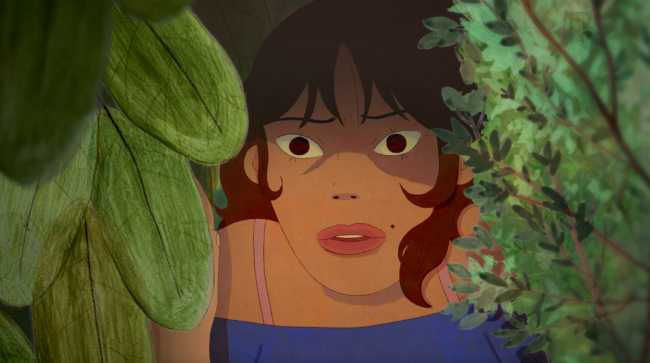
Her thesis film, for example, grew from a convergence of influences: a lifelong fascination with the natural world, childhood summers in Spain, and conversations with family about illness, love, and change.
“All of it coalesces over time,” she explains. “I’ll start with fragments—almost like poetry—and then connect them visually.”
The result is work that feels both intimate and expansive, grounded in personal experience yet open to interpretation.
That openness is intentional. Pilar resists definitive endings, favoring ambiguity that mirrors the complexity of real life.
“I don’t like neat resolutions. I want the story to feel like a moment—something ongoing.”
Her thematic focus often returns to complex emotional terrain, including motherhood, identity, and transformation. These are not treated as fixed ideas but as evolving questions. At the core of her practice is a commitment to honesty—both in subject matter and in her artistic voice.
“Make the work you care about, not what you think is marketable. If it’s honest and strong, opportunities will come.”
That clarity extends to her perspective on the broader field. Pilar is deeply committed to representation, particularly for women in animation—an industry historically dominated at higher levels by men, despite the many women working within it.
What excites her now is a shift toward greater complexity. She is drawn to stories about women that are messy, dark, vulnerable, and difficult—work that resists simplification and lets characters exist fully, unfiltered. In an era increasingly shaped by digital tools and AI, Pilar remains focused on what technology cannot replicate: lived experience.
At the heart of her work is a belief that animation’s power lies not in its limitless visuals, but in its capacity to carry human feeling.
“At the end of the day, it’s about being honest in what you make,” she says, “and allowing yourself the freedom to explore without forcing conclusions.”
Animating Catharsis:
Mulan Fu on Emotion, Process, and the Language of Animation
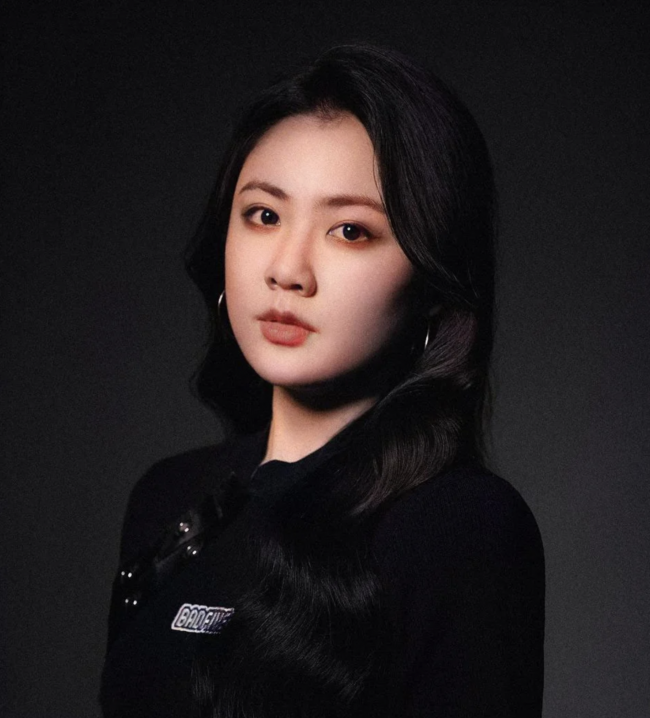
Mulan Fu moves fluidly between worlds—animation, game production, education, and emerging technology—but at the center of it all is a very personal relationship to making images. A graduate of NYU’s film program (2020) and Columbia’s Media Technology and Learning program, she now works as a creative producer in the game industry, developing animated content for global studios while continuing her own independent film practice.
For her, animation isn’t just a job. It’s a way of thinking—and, more importantly, a way of processing.
“I’ve been focusing on personal short films and animating daily,” she says. “I treat it as an expressive medium, almost like catharsis. So much builds up in my mind, and animation has become a way to release it, to let it out and make sense of it.”
That instinct lies at the heart of her latest short film, Just One Peek (2025), a personal project completed over two years of off-hours work. It examines social media addiction and the quiet ways digital systems reshape attention, emotion, and perception.
“It really came out of the quarantine period,” she explains. “Being constantly inside screens changed how I thought and felt. Even when you try to disconnect, it’s not that simple—something stays with you.”
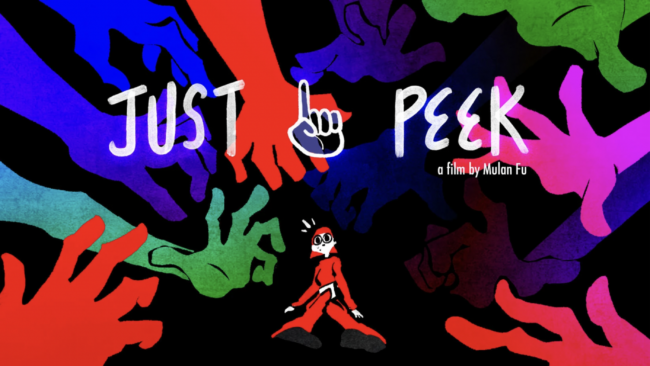
The film follows that familiar emotional rhythm: the pull of likes and attention, the slow build of anxiety, and eventually the difficulty of stepping away at all. But what interested her most wasn’t just behavior—it was aftermath.
“It was meaningful because it sparked conversations I don’t think we usually have in everyday life,” she says. “About addiction, the human mind, and how the digital world is reshaping us. I’m proud of it because it was made slowly, in spare time, over years. It feels very personal.”
Mulan’s thinking is shaped in part by her academic background. At Columbia, she studied Media Technology and Learning—not to follow a specific career path, but out of curiosity about how people learn and interact with systems.
“I’ve always been interested in education,” she says. “Especially how it evolves with technology, and how it can feel more engaging for digital-native generations.”
That led her to questions that sit at the intersection of education, design, and media: what is learning actually for, and how should it feel?
“In school, there was always this tension,” she says. “On one hand, it’s about preparing you for a job. On the other, it’s one of the last spaces where you can really just think—without everything needing to be practical or commercial.”
That balance between structure and openness shows up directly in how she thinks about animation itself.
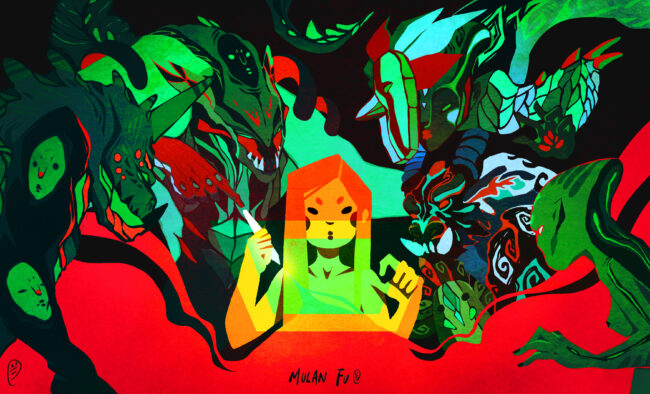
“I don’t really see animation as a fixed craft with rules,” she says. “It’s more like a space where anything can happen. You can break physics, change form, distort reality—if you can imagine it, you can make it.”
That freedom is part of what draws her to experimental animation in particular, where feeling often takes precedence over clarity.
“A lot of my work starts from sensations or internal states,” she says. “Even small doodles. It’s not always about making something people immediately understand—it’s about translating experience into form.”
Some of those internal experiences trace back to childhood, when drawing became a way to process emotions she didn’t yet have the language for.
“Growing up, I went through a lot of negative emotions I didn’t fully understand,” she says. “Drawing was how I dealt with that. Things I couldn’t say became images instead. Over time, those images stayed with me—they’re still part of my work today.”
She pauses, then adds: “For me, animation is really a form of healing.”
At the core of her practice is a simple idea: creativity is not just output, but a way of staying grounded.
“Animation is a medium that contains everything—film, sound, design, motion,” she says. “But really, it’s just a blank canvas. The only limitation is your mind.”
Even as AI tools rapidly reshape the industry, she doesn’t see animation disappearing—or being replaced.
“I don’t think AI is going away,” she says. “But I don’t see it replacing animation. It’s a separate skill with a different logic. The work it produces is fundamentally different.”
Instead, she sees a future where tools multiply, but intention still matters most.
“The industry will definitely change—pipelines, workflows, all of that is already shifting,” she says. “But people who know how to animate will keep animating. And even people growing up with AI tools will still learn animation, because there’s something about it that feels almost magical.”
What won’t change, she believes, is the human drive behind it.
“At the end of the day, creative direction still comes from people,” she says. “Having a creative outlet is such a privilege. It’s a space where you can process life freely, without needing permission. And I don’t think we should underestimate that—it’s a kind of superpower.”
For Mulan, that’s what ties everything together: not technology, not industry shifts, but the simple act of making something from experience—and
A Library of Shame:
Andy and Carolyn London on Tricking Time and Radical Vulnerability
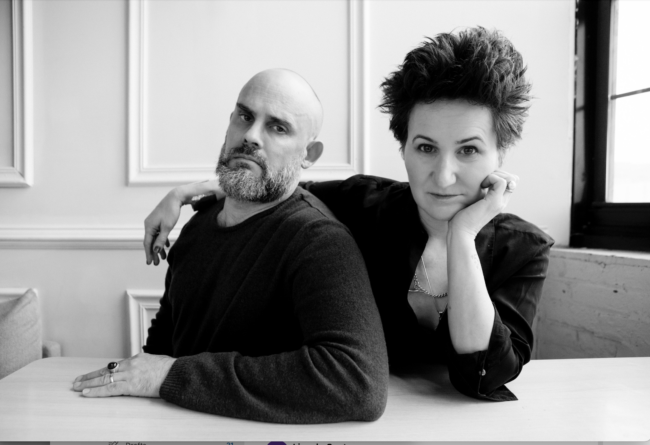
Andy and Carolyn London have been collaborating since the late 1990s—he from New York’s graphic novel scene, she from Chicago, and then to New York to focus on theater and writing. Their partnership began almost by accident on a low-budget music video, where their early stop-motion experiments stood out and were picked up by MTV, laying the groundwork for a long, hybrid creative practice spanning animation, live action, and writing.
CL: “We started when we took on a friend’s music video. It ended up being well-received and got picked up by MTV. Before that, I was a playwright with maybe four people in the audience.”
AL: “And I was a graphic novelist who made about eighty dollars on three thousand copies.”
CL: “So going from that to people saying ‘do more of this’ was a real shift. It felt like, oh—maybe we’re onto something.”
AL: “It was a game changer.”
That early momentum led to their first major film, Subway Salvation, which won awards and opened the door to commercial work. Since then, they’ve developed a flexible practice moving between mediums, always grounded in character-driven storytelling and what they call “radical vulnerability.”
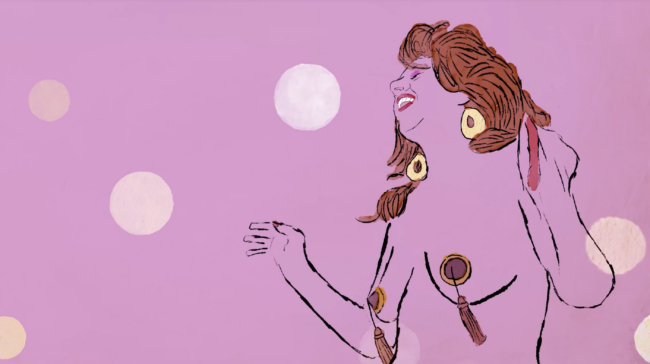
CL: “Subway Salvation ended up winning a bunch of awards. After that, we started getting commercial work, and it felt like maybe we’d found something people were responding to.”
AL: “A lot of it starts with something ridiculous or ‘stupid’ in the best sense, and that instinct carries through everything.”
That sensibility has become central to their work. They often describe it, half-jokingly, as “glorious stupidity”—a commitment to emotional exposure that refuses to smooth over embarrassment, awkwardness, or discomfort in favor of polish.
CL: “The moment you start commenting on it, you’re pulling away from vulnerability.”
AL: “But when you just commit to it—even if it’s ridiculous—it stays open, it stays human.”
Their films frequently draw on personal material, especially experiences that would normally be edited out of public view. Rather than treating embarrassment as something to hide, they treat it as raw narrative material.
AL: “We both draw on our experiences—family, memory, the environments we grew up in.”
RG: “I’m thinking of Andy’s piece Back Brace, for example.”
AL: “There’s a kind of autobiographical honesty to it.”
CL: “That vulnerability thing is definitely Andy’s hallmark. When I met him, his instinct was always to say the most embarrassing thing first. You can’t really shame him—he’s already shown you his shame, and then he’ll animate it, exaggerate it—”
AL: “—and put it in a theater for people to watch. People often wear masks. I do it too, but when I’m making films or writing, I try to let that mask go.”
For them, that exposure is not just aesthetic but also connective. They call it a “radical vulnerability.”
AL: “The things you spend your life trying to hide—when you expose them, they connect you to other people. That’s empathy.”
Their work often shifts between humor and discomfort, landing in emotional spaces that are intentionally unstable. Even their most comedic moments are grounded in sincerity, and their most painful ones are often framed with humor.
RG: “Seeing your back-braced kid in that stall shitting his pants—it’s a beautiful moment. Many moments in your films land deeply like that.”
CL: “As I get older, I’ve realized the line into those feelings is collapsing. You get to be all ages at once—you know what it’s like to be thirteen, thirty, fifty. Everything stays accessible. It’s like a library in there—a library of shame.”
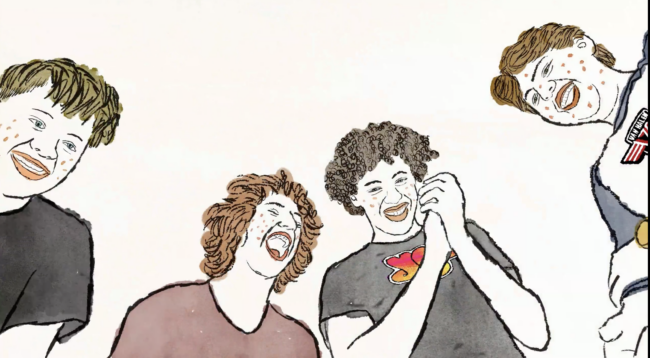
AL: “It’s everything you spend your life trying to hide. When you embrace it, it connects you to people. That’s empathy.”
Filmmaking, for them, becomes a way to organize emotional material rather than to distance themselves from it. Animation, in particular, allows them to shape tone while still engaging directly with difficult experiences, including trauma, memory, and embarrassment.
CL: “Whatever the chaotic or traumatic thing is, we look for the humor in it. I also use filmmaking to work things out.”
AL: “It’s therapeutic. When I’m working on a film, that’s when I feel my best.”
Their current slate continues in that vein. Their recent film, 1981, screened at Sundance this year and won the Grand Jury Prize for Animation at the Florida Film Festival, is being developed into a series — a satirical project set in 1980s Long Island that uses MTV’s arrival as a lens on cultural change. They are also developing a live-action series.
On AI, they are pragmatic rather than resistant. They view it as a tool, not a replacement for authorship, and emphasize that point of view—rooted in lived experience—remains essential. At the same time, they’ve observed renewed interest in handmade, analog animation, where the process and human presence are more visible.
Their practice remains shaped by early DIY instincts and a resistance to rigid structure. They view that looseness not as a lack of control but as a method of discovery.
CL: “We try to keep an almost improvisational quality—keeping things feeling unfinished, untethered, and fresh for as long as possible.”
AL: “In animation, that’s difficult because everything is so time-consuming.”
CL: “So we try to surprise ourselves — develop weird techniques to trick time so the work feels as present as possible.”
Tricking time. That may just be the best definition of animation ever.