On a beautiful summer day here in NYC I visited MoMA to talk to curator Ron Magliozzi about his upcoming exhibit: It’s Alive! A Century of Animation from the Collection. It was nice to learn that board members Candy Kugel and J.J. Sedelmaier are involved in the organizing of this epic exhibit, as is Robby Gilbert, author of New York Animation 1966-1999: A City in Motion.
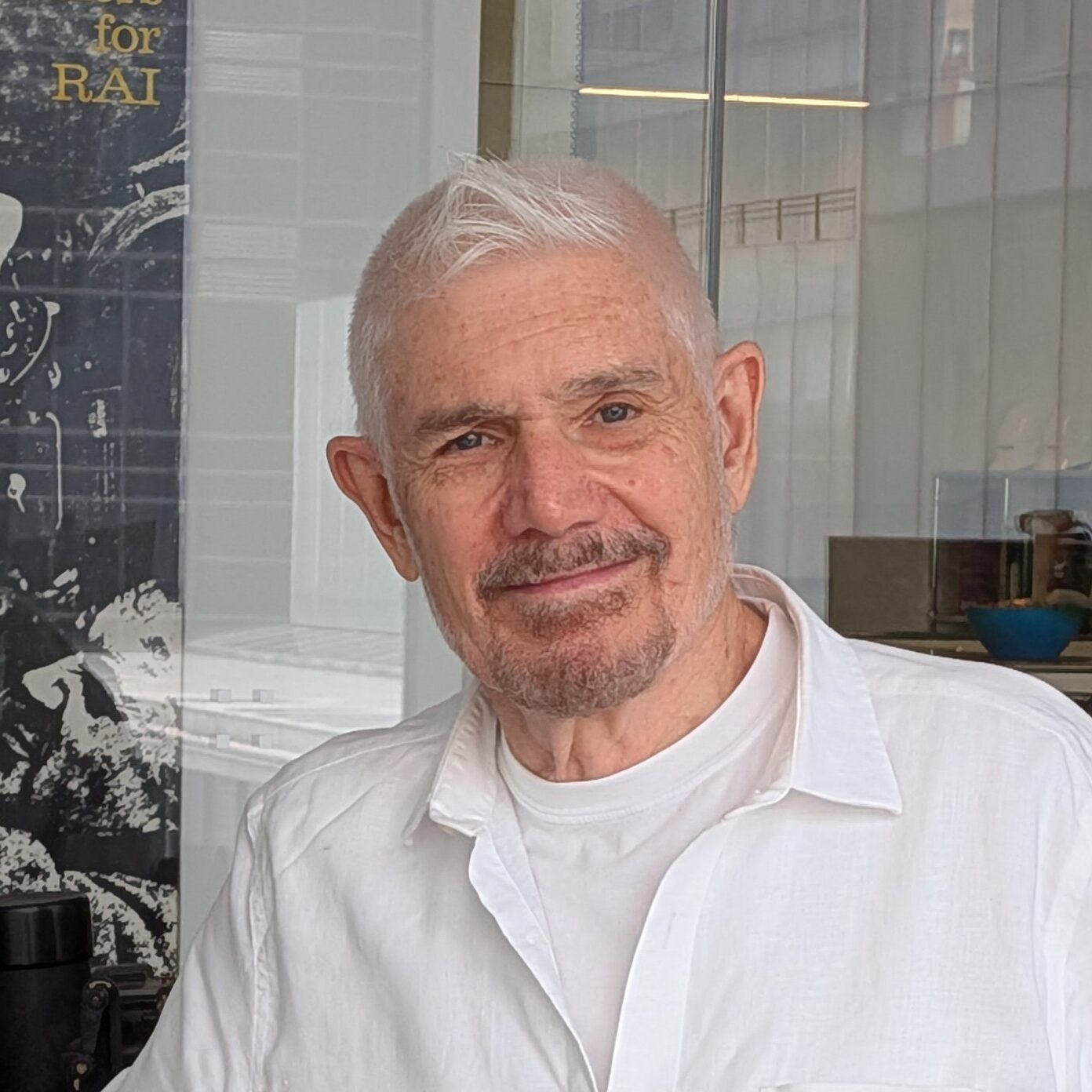
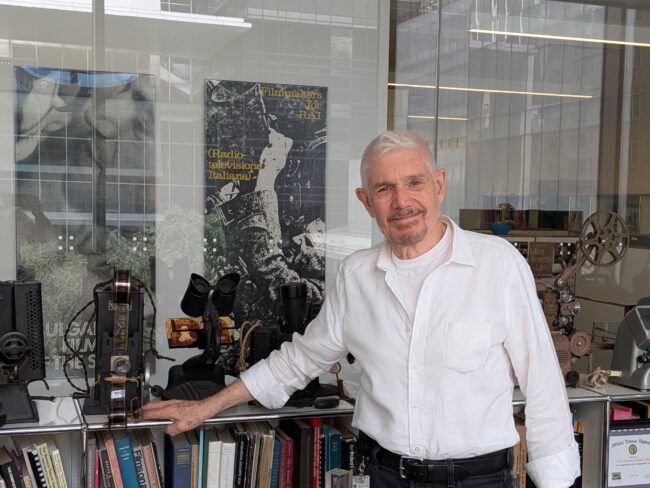
Ron Magliozzi joined The Museum of Modern Art in 1979 as Assistant Supervisor of the Celeste Bartos International Film Study Center, specializing in access, collections research, and acquisitions. Since 1993 he has organized over 50 monographic and thematic film programs, with particular emphasis on early cinema and animation. His gallery exhibitions have focused on the Quay Brothers, Pixar, Ernie Gehr, and Tim Burton, as well as home movies, in the exhibition Private Lives Public Spaces.
Vitarelli
Can you just give us a short bio on how you got to where you are?
Magliozzi
I was a Columbia film student and someone said you can volunteer at the Museum to help them file clippings. So I did that in 1977, and I never left, essentially. I started in reference and then I moved into collection and collection development. That’s when I began acquiring.
My mentor, Archive Curator Eileen Bowser was eager to have someone who was interested in helping to build the collection. That’s around the time, 1992, that the Philip Stapp (see below) scroll came in. Most of the animation art in the collection came in during the time that I was here through the generosity and with the relationships we have with artists like John Canemaker.
How did this exhibit come about?
I’ve long wanted to do this exhibition. In fact, when we’ve acquired artwork from animators through the years, they’d all ask, “Well, this will be exhibited someday?”, and I would say, “Yes”, thinking to myself, “I’m not sure I’ll have the opportunity.”
So, this is a long time fulfillment of a long-held desire…I’ve been here a long time. I’m going to be retiring in the next couple of years, so I’m glad I’m getting to do the show before I’m done.
As you probably know, I’ve done larger loan shows with major animators like Tim Burton and Pixar and [Guillermo] del Toro and the Quay Brothers, but the Museum’s collection has always been important to me. It’s very rich, and it’s not a collection that is well known even by other members of the film department.
I’m talking about the works on paper, and such. The films in the collection they’re aware of more or less, but not the other kinds of material.
One of the reasons you do a collection show is because it’s more financially viable. There are no loans. There is no shipping. It’s less expensive. The museum is ramping up for the 100th anniversary in 2029, so there are budget restrictions. That’s one of the reasons I proposed a collections show. The timing was right for this knowing that the budgets were restricted. A loan show wasn’t feasible, which is unfortunate when collector-artivists like J.J., whom I’ve been talking to, have so much to offer.
It runs for one year. Is everything all set? The screenings? The gallery?
The gallery show is set. Installation starts on July 20th. The works are in the frame shop being mounted. You know when I do an exhibition like this, I always say it’s like making a film: the works that you pick for the gallery are your cast and you work with a production crew. The designers who design the space and construction, people who build the cases for you, and when you get to the floor, you put your cast where you expect them to be. It’s Alive! is fully cast.
The film series is another matter. Our focus is on New York, because I’ve primarily been focused on collecting not just animation, but filmmaking and cinema that has some basis in New York, whether it’s exhibition history or independent filmmaking, animated or not. There were a number of animators, whose films are in the collection, who are not represented in the gallery exhibition because we don’t have any production art from their work. When I initially proposed the exhibition, George Griffin immediately asked, “What about Lisa Crafts and Frank Mouris?” The film series developed out of this. It was always designed to fill in the blanks, to show the fuller range of what the animation collection
I should add that the filmmakers featured in the gallery will also be presented in the film series, so that our audiences have a theatrical experience of their work. In the gallery, we certainly couldn’t show 20 films simultaneously with sound, so our solution is to not have the sound running. The films in the gallery will play unedited but silent, with animation artwork mounted adjacent to the screens. Our intention is to encourage visitors to experience the visuals differently, to encounter the moving animation graphics without the distraction of sound. That said, for sound, visitors will have the option of accessing the Sennheiser system with an app on their phone.
Do you have any idea about how many films you’re going to be showing over the course of the exhibition?
I have about 300.
Ron shows me the playlist in progress.
These are what are on the list now, by artist. The exhibition’s focus is on artists. For instance, I’m working with Robby Gilbert on a Tee Collins program which hasn’t been done before (I believe he’s working on a book about Tee now). The film series is still a complicated work in progress.
When we put together a program this ambitious, we need to think of our colleagues at the film vaults who are required to prepare and ship prints, and our projectionists. When you’ve got programs that have 16 and 35 millimeter prints as well as digital works, they need to be organized rationally, otherwise the guys on the booth will be running in circles changing from one format and projection machine to the next.
Also, a draft of close to 300 titles like this requires pre-screening all of the films to check the print quality, to make sure they’re not faded or otherwise compromised. You’re looking at the list that we’re sharing with our projectionists to get their feedback and also with the film storage facility in Pennsylvania. We have a lot of previewing to do.
I recognize all of them actually. So you’re concentrating more on the independent animator; the Hubley’s, Michael Sporn.
I’m not surprised you know them, they’re all your union, right? And yes, the focus is largely independent, New York based filmmakers from the collection. With two exceptions, we’re not sourcing any prints from outside. The exceptions are the Tee Collins program I mentioned and a program with J.J. [Sedelmaier ]. I’ve been talking to J.J. about doing something for years and finally, we’re doing something on his outstanding work for television.
In addition to the shorts programs, there will also be features, most likely scheduled in the holiday corridor – Lou Bunin, Richard Williams, Pixar, Tim Burton and such.
The film series runs from October 21st to the end of May 2027.
Didn’t you say August?
The gallery exhibition opens on August 1st and it will be a “soft” opening. October 21st is when the film series starts and that is when we’re going to bring all the animators together for an evening program.
This is a ridiculous question, but approximately how many hours of animation do you think you’ll show?
Oh God, I don’t know. Well, let’s see: I would count the number of programs we’d like….
…At this point we’re figuring there will be 27 different programs, from 40 to 90 minutes. So if we round that to 60, that’s 1620 minutes of animation.
I’m hoping some of my colleagues, Katie Trainor, Cara Shatzman and Francisco Valente, who are assisting in the organization, will adopt individual programs, and we’ll start reviewing the films to finalize the checklist.
I was looking at the list on the press release, which is not nearly as comprehensive as what you just showed, but there’s four names that stood out that I didn’t see. Harry Smith?
Well, Harry Smith is not in the collection.
Bill Plympton?
Bill Plympton is who I was thinking of in particular. Not in the collection.
Signe Baumane?
Not in the collection.
Pat Smith?
Not in the collection that I’m aware of.
We were very insistent that “From the Collection” was part of the title of the exhibition. It’s not a judgment. Anyone who’s not here is because we don’t have their work. Organizing the gallery show was based on when we had films and art from a filmmaker. That was the first pass that we made.
The thing is, and it’s important to keep in mind, the Department of Film has done over 100 animation exhibitions in the history of the museum. It has done programs featuring filmmakers who, unfortunately, are not represented in the permanent collection. The Museum has featured Bill Plympton and R.O. Blechman in the past, for example. Their work didn’t come into the collection, but they have been acknowledged. For years the Museum did annual Annecy programs following the festival. So, it’s shown a lot more animation than it has in the collection. People sometimes assume that everything screened is acquired – sadly not true.
Many of the artists, [George] Griffin, [Candy] Kugel, [Tissa] David are well known to us who have been in the industry for some time. Are there any artists, maybe lost to obscurity, that we will learn about?
I think Philip Stapp.
I never heard of him, so I did a little search. There’s not a lot about him.
Coincidentally a book about him was just independently published, “A Genius Revealed: The Letters of Philip Stapp” by Ann Taylor.
Oh, great timing.
Gets the book
Look at this. Ann Taylor was a personal friend of Stapp. She reached out and sent this letter with the book, just a couple of weeks ago.
This is beautiful, I have to say.
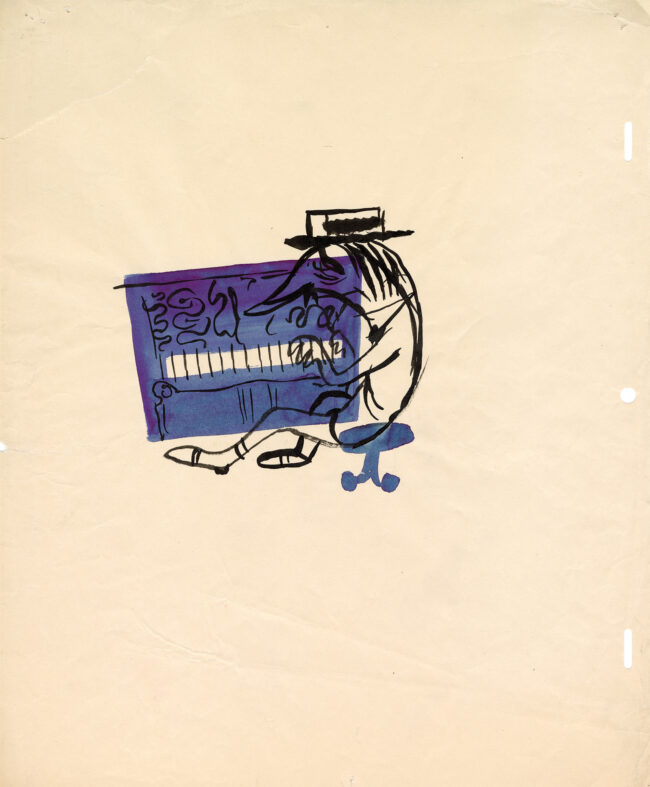
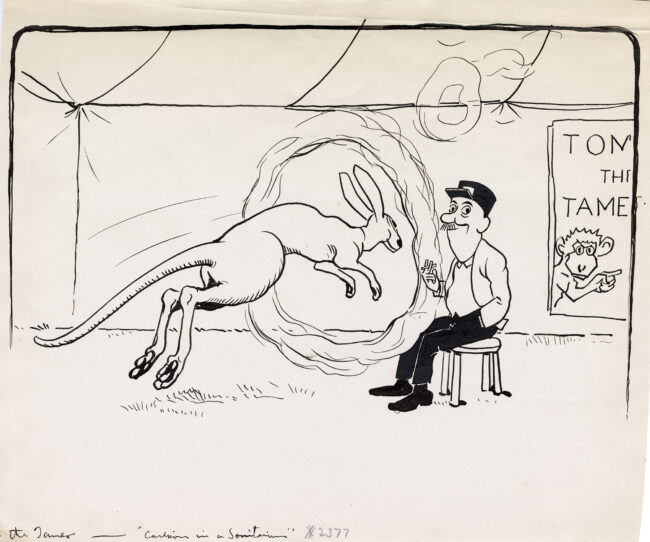
Stapp gifted a scroll to the museum in 1992. He had a long relationship with staff—I learned this recently myself—with Alfred Barr, the founding curator of the museum in the 40s. Alfred helped him get a Fulbright Grant. I have to say, all the artists included in It’s Alive! have had a relationship with the museum, and that’s how we ended up getting their work. Stapp has a significant filmography but he stopped making films in the 70s, and then worked on making scrolls. A couple of years before he died, he gave the scroll titled Interstices to the Department of Film.
The scroll is 24 feet long. We’re exhibiting it in two sections for conservation purposes, for the first six months, the first 12 feet and for the second six months, the last 12 feet. It shouldn’t be in the light for long periods. This the first time that anyone’s ever exhibited one of his scrolls rolled out.
The current generation of indie animators don’t have the opportunity or the resources to create like the artist working from the 60s to the aughts. But there are more than ever and they’re creating personal, educational, experiential and commercial works. How would MoMA select works that are distinguished to add to your collection?
Acquisitions generally result from exhibitions. When we do a monographic exhibition on an animator or a festival, like we used to do with the Annecy programs, we develop a relationship with the filmmaker which may result in bringing in material. But there’s no protocol for systematically looking at the latest animation and deciding on acquisitions.
This exhibition concerns pre-digital animation. The first area of the gallery focuses on the origins of animation in New York with Winsor McCay, Raoul Barre and the Fleischers. And the lower gallery on the generation that follows John Hubley, the post cartoon modernist generation. Infused with more progressive works of color and movement.
It doesn’t address the independent animation scene that followed that period, celebrated with the efforts like the Mike Judge “Animation Shows”, Spike and Mike festivals. There isn’t much of that generation of work in the collection at this point.
How up to date are you on the animation scene now?
There are many current animators producing films. They come out with maybe something every couple years, except for Bill [Plympton], who comes out with one every week! But these animators who are producing their own independent work and are worthy successors to Canemaker, Griffin, Kugel, Jane Aaron. How would this next crop of animators form that relationship with MoMA?
Communicate with curators when their films are being screened, where people can go see them. When the work is digital, it can be shared much more easily. They need to be more aggressive in reaching out to the museum, contacting curators.
I’d like this exhibition to lead to the acquisition of more work. I hope we will connect, perhaps during the screenings, or during the run of the exhibition with other animators whose work should be in the collection.
When George Griffin said, “Lisa Crafts is not in your show,” and reported she has art, I said ”Please put us in touch.” If she has animation art that might be acquired, that would be great.”
So you have a warehouse in Pennsylvania where you store nitrate films, 16mm, 35mm. If you acquire someone’s digital animation, how do you store the digital files?
Not only is there the Moving Image Preservation Center in Pennsylvania, but there’s a digital repository that has multiple storage locations around the world. The Museum’s digital repository, DRMC (Digital Repository for Museum Collections) was established around fifteen years ago.
The digital team and the Hamlin team, the analog team, work together to make sure the work is processed and cataloged after it’s acquired. A curator screens it to approve the quality, and it becomes part of the DRMC.
It’s easier, much easier, for us to program digital works here for the series. Most of Candy’s work is digitized, so that might be an easier program to produce.
However, I’ve tried to avoid the ease of digital when we have the opportunity to show 35mm. I have a real interest in preserving cinema culture, now that we no longer live in a cinema culture anymore. We live in a moving image culture.
When we screen an analog print of film the experiences are more cinematic, there’s the live nature of the print that’s running through a projector. That’s special. Some people treasure it. I like the cinematic artifacts. It’s a concern when they’re eliminated in the digital process.
Two of our members, J.J. and Robby, are part of helping you structure this exhibition?
Robby’s book coming out at this moment, I couldn’t believe it when I saw it! It was quite important for me to read it after I’d already organized the exhibition, to see who wasn’t in It’s Alive!. It was helpful that way, that’s why I reached out to Robby, and that’s why we’re working on a Tee Collins program.
Yeah, I’ve been talking about J.J. for a long time. He’s got an amazing collection himself.
Since you’re digitizing a lot of this animation, is it available online through the MoMA website?
We’re exploring that more aggressively. The goal is yes, to make all this work available online. There are copyright issues. There are a lot of issues to be dealt with and we often do that in conjunction with an exhibition so there may be some of these films on the website while the exhibition is running.
Thank you very much.