Interview with Douglas Vitarelli
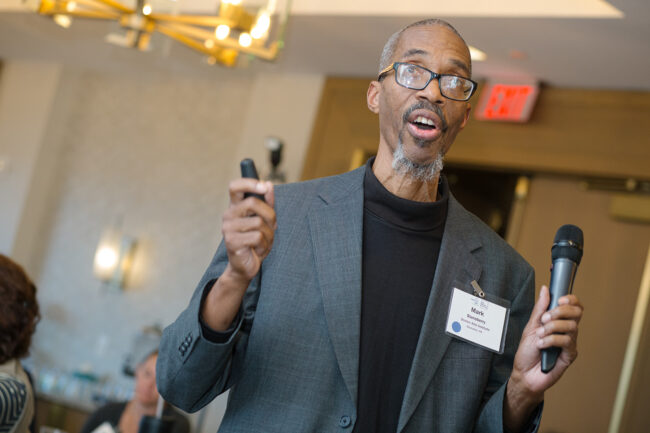
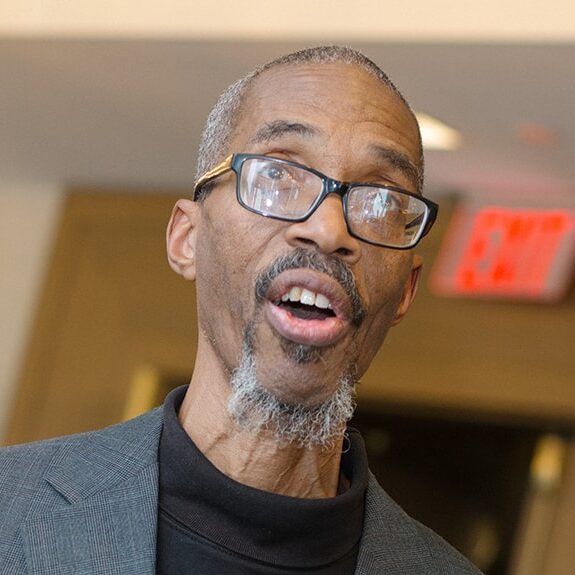
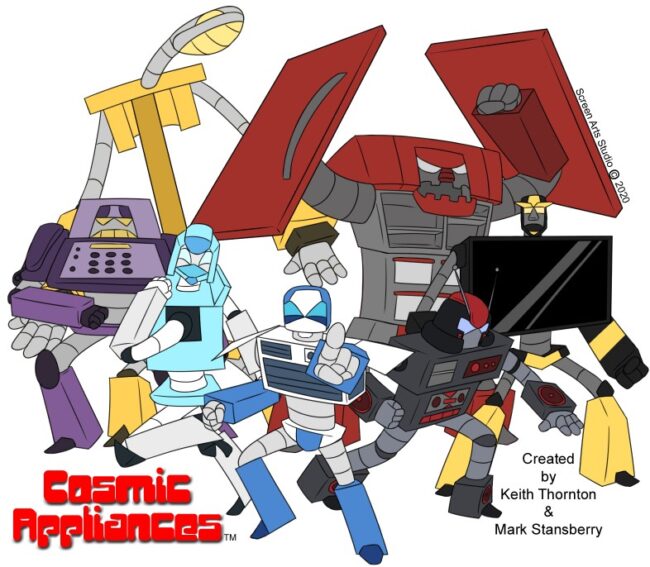
Mark Stansberry, the owner of Screen Arts Institute, has been producing traditional 2d animation for over 25 years and has worked on everything from network animated series to television commercials to music videos. He has also pitched his own show ideas face to face with major network execs several times. But he is done with hearing “no”. So with the help of wife and kids, he decided to put out a series on his own and skip the Hollywood game.
I first met Mark when he was selling his animation on DVDs on the 3 train back in the early 2000s. Loving his entrepreneurial spirit I bought one for $1. It contained a bunch of shorts starring his character Puddin’. Soon after we connected on LinkedIn and I’ve been following his progress since then. Like many animators who live outside NYC and its immediate areas, Mark’s been up to some very interesting things. As you’ll see…
Doug Hi, Mark! Nice to meet you again.
Mark I think you said you bought a DVD. I hope it doesn’t offend you but I only remember the celebrities who bought the DVDs. But other than that literally thousands of thousands of people.
Doug I was on the 2 or the 3 or the A.
Mark Yeah, those were my trains.
Doug Where’d you live when you were up here? Just curious.
[Lots of talking about where we lived. Turns out, in the same neighborhood.]
Doug Lots of changes, although Sunday morning I heard gunshots just down the block.
Mark Being born and raised in Baltimore, Maryland gunshots were weekly things.
Doug So we met on the subway. So did you know of ASIFA-East?
Mark No, because I’ve always considered myself to kind of be a B or C level animator, and to me, ASIFA was more artistic and foreign. I’ve never seen myself as that type of artist, let alone an animator. It seemed kind of high falutin. That’s the reason I never joined it
I didn’t have a lot to go on to make that assumption, but I just that’s just what I thought.
Doug Boy, I have to say in the scope of society and the fact that animators have a, b, and c levels is kind of frightening because we were all the nerds of the playground in third grade.
Mark
There’s still different levels of people’s artistic ability and I’ve never met too many artists that didn’t have an air of insecurity. So I can be pretty insecure about my art. And then, when I see what other people do, I’m glad that people are at that level. But yeah, it can be intimidating sometimes.
Doug I have also experienced that, and I don’t know anyone who hasn’t. There’s always someone who could draw better. There’s always someone who has a better idea. It’s always someone who works harder or whatever. You could always compare yourself to Bill Plimpton and we all kind of fall short.
Doug Tell us about your career. How did you get started?
Mark Initially, I started out as a photographer. And high school just happened to see a few books on animation and always wanted to do animation.
Doug You remember which books? Preston Blair?
Mark It was those two but The Animation Book by Kit Layborne was probably the one in the beginning because it was in the vo-tech (vocational-technical school) library. Once I graduated high school I studied photography for a year in community college, and wasn’t impressed with the instructor. They didn’t inspire me to really pursue it.
Switched over. I took a couple of Super 8 film classes and I didn’t do that well, but that was closer to what I wanted to do as far as to physically manipulate artwork and drawings. So I dropped out of community college after a year but I kept the animation bug. Eventually I asked my dad to lend me the money to buy animation equipment with no real knowledge of animation at all. I was just totally flying by the seat of my pants. He didn’t want to do it, cuz you know most people. Being old school, dad didn’t see artists that, you know, you can’t make money doing this. But my mom persuaded him and he gave it to me. She forced him to give me $900. This was in ‘89 or’ 89, and I bought two animation tables, the standing upright ones with a flat wooden cover, and two animation discs, the black ones that were from Korea. And I bought all these books and a blue field guide, which I still have, from Cartoon Colour, and so I set up a small studio in my apartment with my wife and my two-year-old son. And just started animating.
And then, being the person that I am, I just decided I wanted to start making animated commercials. So I talked to a couple art schools in the area and said, “Can you give me some interns to let me train them on how to do animation?” and I didn’t really have any experience but it was just in me that what I did or taught them was right. And I did two animated TV commercials in Baltimore City with the help of interns from the Maryland Institute College of Art. And after that it’s, like, “Oh, I can. I can do this and I can make some money at it.” Because I was paid for both of the TV commercials.
And from there, I said, well, I’m good enough to do this, let me see if I can step up to the big leagues. So I applied to Disney and Warner Brothers. But I definitely was not on that level.
I got two rejection letters back, which I still have right now in my studio downstairs up on the wall. Even for the students to come here now, it’s like, ““You know, you can still do this, even if somebody closes the door in your face.”
I cherish those two letters,but when that happened, I said, okay, let me try New York City. So I borrowed some bus fare from my mom, caught the bus to New York City just for like a day trip type thing. While I was still in Baltimore, I went to the library, a big reference library in Maryland and back then, when they still had Yellow Pages, the thick Yellow Pages. I found the Yellow Pages book for New York City. And looked up film Animation Studios. It was almost like a page and a half, and I just ripped it out and took that page to New York City and literally knocked on the doors of a whole bunch of studios.
They’re probably now in existence anymore. Each one, either they weren’t hiring, or they could probably see I was really green or wasn’t good enough. Or they would point you to another Studio. And I remember the studio that did give me sort of a break, which is now out of business: Broadcast Arts. And they had Adele Solomon and she let me come in and attempt to learn or do animation. I didn’t really do anything, but I got to look over the shoulders of a lot of other people, and I learned from just doing that. I remember when I initially got into animation, I didn’t know that you drew the line work on a cell on one side, and you painted on the back. I didn’t realize that until I got the Broadcast Arts and saw them doing it. That was a game changer for me, so I would run back and forth to New York City maybe once or twice a month and check in with Adele to see if there’s anything that I could do. There usually wasn’t but she was very accommodating.
After Adele left I didn’t kind of have that open door. And then, not long after that, Broadcast Arts closed. So, I just said, “Well, I’m gonna stay in Maryland and just start my own studio”. I had recently gotten hired at General Motors in Maryland so I had a full-time job, too. A lot of times, I would take off to make these runs to New York City. I would take a day off from General Motors. And so I had a good paying job which afforded me to buy tons and tons of animation, equipment, books, paper, cels, paint. I probably had one of the best animation studios ever for somebody who was just a really green rookie.
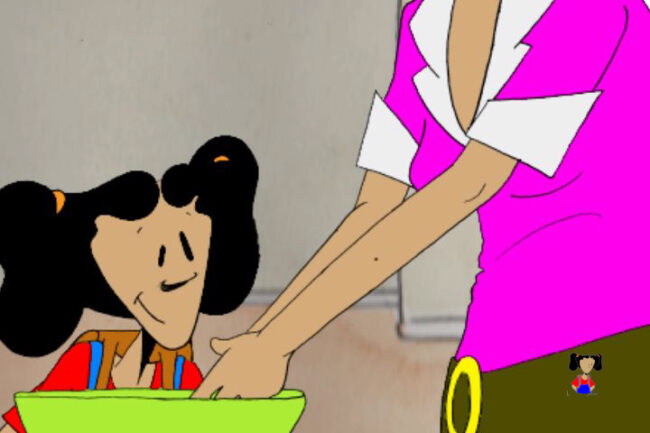
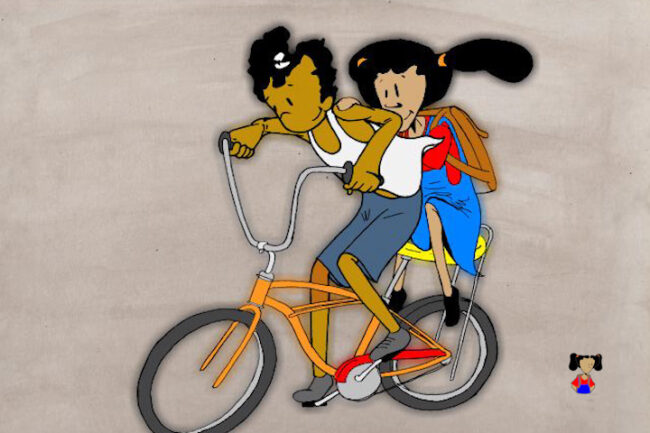
And I brought in a team of six or seven adults. All people who were just like me, wanted to learn animation and by now, I knew a little bit more. I made a couple short films of my own. I had even showcased a couple films at the Baltimore Museum of Art and different things, so I had a little bit more experience, so I started teaching again. And I wanted to come up with one direct product or vehicle, and that ended up being the character Puddin’. The one that is my mainstay now.
And that was the beginning of those DVDs. So a lot of that animation was made by the help of these other people but a lot of it was made by me alone. From there, I just kept producing the animated shorts and then I decided I wanted to really put it out there, on TV,
While I was still at General Motors I reached out to a couple major networks. And the first one to even give me any feedback was BET, and this was in ‘99, maybe 2000, but the only caveat was. It was too family and it didn’t really aim at one direct demographic. They wanted something specifically aimed at a group of people and I could never fit that box. But the Senior VP of development was a very accommodating person and gave me a lot of advice
But, I just decided that I can’t deal with the big networks. I’ll take this very grassroots, which also set the stage for the subway trains later.
So I went to public access tv in Baltimore and I got a huge response. A lot of people would reach out to my parents and other artistic community events who would come up to me and say they saw the show in the shorts and they loved it. I’ve never figured out what people see or saw in it because it’s always been a general slice of life.
When the General Motors plant closed I got a huge buyout of $150,000. That was in 2002 or 2004
Doug Wow! That’s not a bad amount of money.
Mark It was enough for me to go to New York City and we ended up in a huge loft in Williamsburg.
And before we even moved. I had a studio in a retail store in Chinatown on Orchard Street. The retail store, selling anime stuff, was on the first floor and on the second floor was the studio.
So, I was doing the retail thing and producing and teaching animation. And I did that for about a year and a half. But despite our success I had a couple really bad pivots.
I don’t mean to downplay it, a lot of people who have accommodated me. I had a pitch with an executive at NBC. Had taught me about doing some interstitials for one of the local NBC affiliates there in Manhattan. ThenI took him some Puddin stuff and explained the concept and he thought it was a good idea for what they were doing. He said, I’ll run it up the flagpole and see what they say upstairs. So I just stopped selling the DVDs and went whole hog on trying to produce all this content to really give them something concrete to look at and hopefully give me some kind of deal.
So that kind of cut my money flow. I’m thinking, okay, it’s worth it because I may get a deal with NBC, so let me go ahead and try to do that. Then this person left NBC and went back to their original network. And then, when I went back to NBC, it was: They’re not here anymore, so we don’t know anything about what you’re talking about, so I was left high and dry
And that was the beginning of the end, financially
But the way it came together again was another individual on the subway train, Greg Scholl. I think he went over to Lincoln Center for Jazz [he did] but while he was at NBC for a short while.
Doug So you, you met these people selling your DVDs on the trains and that’s what led to these opportunities?
Mark Yeah. When Greg bought the DVD he was a senior VP at another big company, The Orchard, and they were, at the time, one of the major online music platforms for musical artists, so he bought the DVD and got me a distribution deal.
So I was with The Orchard for five years. They distributed the cartoons on planes. They gave us a YouTube channel and we got monetization before it changed a few years ago, where you had to have a certain amount of subscribers. That killed it. I was actually getting, every three months, a good little check for the Puddin cartoons. And weirdly enough, the biggest audience was in South America
Because now I was getting paid, and didn’t want to get into copyright infringement, I had to redo it all because I was just taking tape and stealing samples to put in the cartoons.
That was a good distribution deal for five years. And we were still doing a show in Baltimore on public access at the same time
In 2013, whereabouts. It wasn’t fun anymore. And because jumping on the trains got to be too competitive between, sadly enough, homeless people begging, Mariachi, breakdancing…
It was losing its charm so, in 2013, I just stopped.You cannot imagine how much I loved doing those trains. Because. Even if people you know just enough to trust you to sell a DVD, and it could have been blank
Doug How many, let’s talk specifics here?
What were the best times to be on the train? How long were you on the train selling?
Mark It was Monday through Friday, 6 a.m. About 1 pm every day. So it was not really a peak, but I’m on it for the the rush hour at the beginning, And then, usually, it tapers off around lunch, so I was usually stopping around 1:00, 1:30. There were quite a few times I would just be on, and the dollars are flying, and I would go to, like, maybe two o’clock, and those were days that I would sell 200 DVDs.
I was also contacted by a young lady last year, whose grandmother gave her the subway DVD when she was 9 years old in 2013 . She wore the DVD out playing it so much and then wondered how to see more . Fast forward 12 years later, she tracks me down and emails me saying how much she loved the cartoons and had always wanted to find more…lol…SO, I sent her all the newer animation along with some t-shirt, 3d printed figures of Puddin and signed original drawings from cartoons. That definitively let me know my efforts were not in vain..!!
Doug For a dollar.
Mark It’s a dollar. Yeah, okay, but
Doug Why did you move from New York? And then I want you to talk about the Screen Arts Institute.
Mark
Okay.
Doug Then I want you to tell me about that $400,000.
Mark Well after the trains were no longer fun, I started doing remote work on Fiverr, so I was still able to make some money. And I love New York, but it is expensive. So we saved up some money and I just decided, “Okay, we’re gonna move out of the city so we can live a little bit better.” So, I looked on the federal government’s HUD website where they list foreclosed homes.
The time between 2011, 12 2013, when I started looking, was a window when the houses were so cheap. It was the perfect storm for us. So we found the house in the middle of Pennsylvania. Three beds, an attic, one bath basement.
The only thing that needed work was the plumbing. So we bought the house for $1,500. Total cost at closing was $2400.
After moving, I started airing on public access in NYC in 2018 ; MNN (Manhattan Neighborhood Network) first. I then added “BronxNet” . I kept pursuing public access stations and currently air regularly on MNN, Bronxnet, BRIC in Brooklyn, and regularly on public access channels in Erie Pa., York Pa., Greenbelt Md., Auburn Hills Mi., Berkeley Ca., and sometimes in Tampa Bay Fl…..The show was on in Stockholm Sweden for about a year and a half (that was harder to keep up with because they wanted it weekly..lol..)
Doug I’m looking at your website. Do you own that building too?
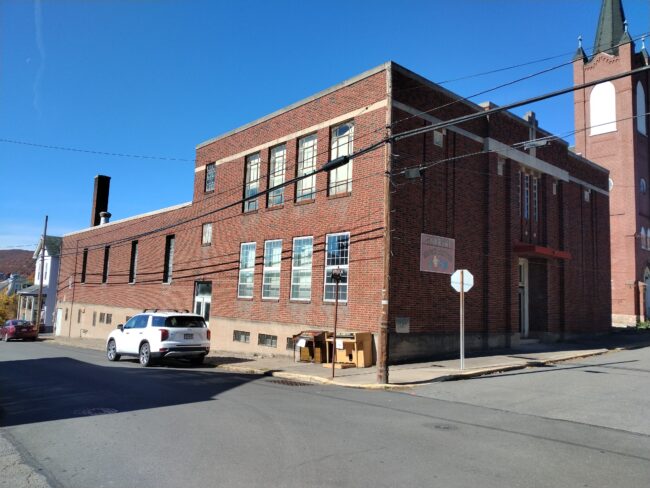
Mark Yes, when we got the federal grant, we bought the building. It’s also paid for completely and it’s only two blocks away from my house.
So we have a Saturday class teaching high schoolers animation. I also air animation from another NYC animator, “Amir Diop” . He found me by way of his grandfather seeing the show on public access, he then saw it and reached out to me. He’s an elementary school teacher in the Bronx I believe. He does cut out paper animation. When I saw it , I loved it and asked him to let me air it on my series, and I’ve shown 2 of his short films. The kids in his class help him do all the cut outs..lol.. and then I said, if I’m already teaching this stuff, let me make it legit and get something out of it. So I decided to form a non-profit and began to look for funding after I had my 501c3 status. That’s when we came into the arena of the federal grant, which actually was the idea of one of the people, I’m in a lot of community groups here, who wanted me to work with the high school.
So we put in for some grants, two or three times, and didn’t get them. I was about done but said, let me just try for one more, let me swing for the fences. So we put in for this Appalachian Regional Commission Grant. The total is actually $800,000 and I had to find the other 4 on my own.
Found another two hundred thousand. Then with what they call in-kind labor, it was worth $200,000,, which made it a total of eight.
So with that we bought the building, all of the computers, display tablets, 24 inch screen, 16 inch screens, computers, smart boards. 3D printer.
Doug That’s amazing. Just have two more questions. What are your thoughts on animation today?
Mark Animation, to me today, I was telling my son, I’m gonna take it from the mainstream networks, maybe Disney, Nickelodeon, Netflix, and I’ve seen this when I’ve dealt with a lot of interns from college and people sending me portfolios or seeing portfolios, I don’t see a lot of originality in the way a lot of the shows look.
I’m talking about TV, not animation as a whole. When it comes to TV and streaming there’s nothing original or nothing new, which is why I’ve always stayed, and I respect independent people. Independent animators because they usually think outside the box, and they’re going to do stuff that’s not cookie cutter.
Doug Your influences?
Mark John Dilworth.
Doug Great, one!
Mark Robert Clampett. Fleischer Brothers. But anybody who deals in simplicity. You know, Puddin is very simple, very simplistic. So I love simplicity and story.