
By Robby Gilbert
Published by Palgrave MacMillan. 366 pages
Book Review
By Douglas Vitarelli
Like many animators, I have a decent collection of books on animation, cartoons and graphic novels.
Like many animators, my top two books are Disney Animation: The Illusion of Life and The Animator’s Survival Kit. If you’re reading this, you know who the authors are.
Then there are your personal essentials. For me it’s Moomin, The Dam Keeper, Bone and Dick Tracy. Miyasaki’s Starting Point, McClouds Understanding Comics and Of Mice and Magic by Maltin are some of my more historical favorites. And then there are the ones you wished someone had written. For instance, I really hope someone writes one on Frédéric Back.
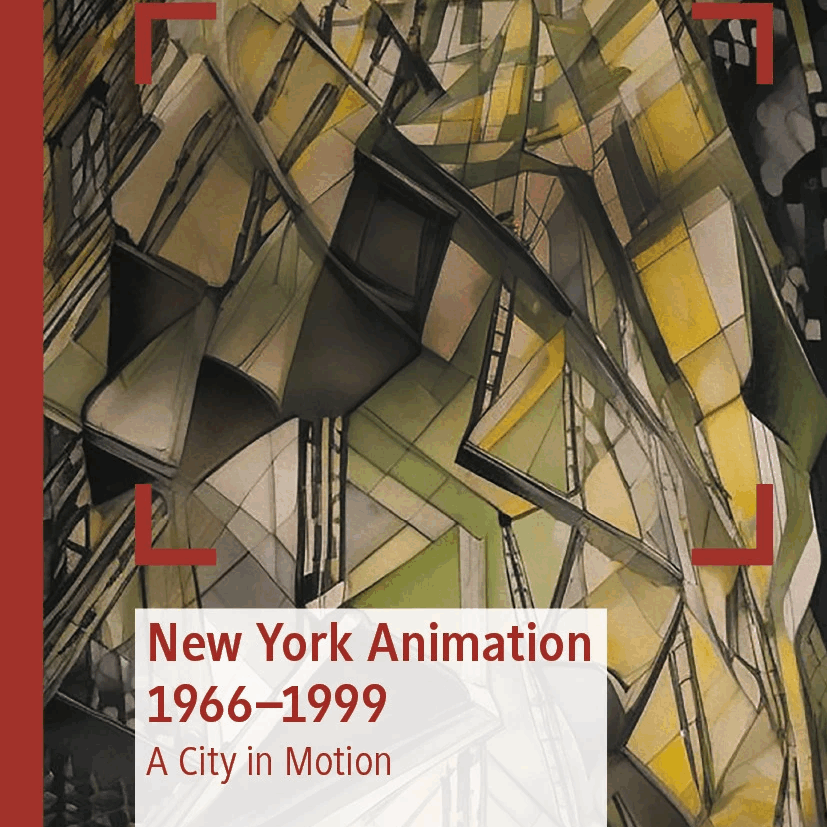
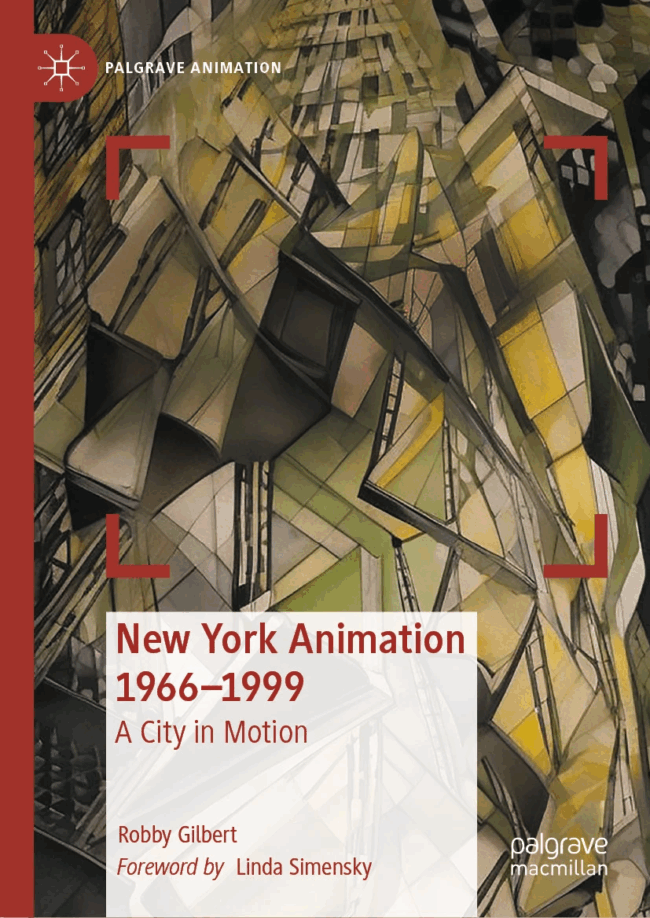
Luckily for us, the first definitive book on NYC and animation has just been published: Robby Gilbert’s New York Animation 1966-1999, A City in Motion.
It’s a monster of a book.
As the title states, it recounts the animation industry from 1966-1999 in NYC. It was a turbulent era, made clear in the first chapters opening words;s “The Industry Is In Trouble”. Luckily many of the major players discussed are still around and Robby, being the excellent interviewer he is (read his many articles for the aNYmator), has talked to a multitude of our industry’s stalwarts like Candy Kugel, John Canemaker, J.J. Sedelmaier and the invaluable Howard Beckerman.
Beginning with the downfall of the union and the Oxtoby-Smith Report, the book then proceeds to the rise of the independents. Along the way he writes about the many business and technological milestones that, just when it seemed animation would disappear from NYC, revived the industry. Events like The Children’s Television Workshop, NYIT and new technologies like the Lyon Lamb system. Of course, computer animation has its own chapter.
Then there are the profiles of the animators themselves. Robby profiles the early independents like George Griffin, Frank Mouris and others who expanded the definition of what animation could be. The contributions of Black animators to the art form in such spaces as advertising and Sesame Street. The genius of Jim Henson. There are mentions of those among us who are more experimental, daring or just crazy, like Fred Mogubgub, Harry Smith, and Ralph Bakshi.

Finally there is, as my generation of working animators called it, the circuit. The many studios that started and soon ended who employed a rotating cast of artists in the freelance, permalance and staff positions. Sure, some of them lasted 10-20+ years, like the Ink Tank, Michael Sporn, J.J. Sedelmaier and Buzzco but many of them who had a noticeable effect at their time, though now long gone, are dutifully noted. And those are the boutique studios. Robby’s profiles of the major NYC studios, like Broadcast Arts, Curious Pictures, MTV, Nickelodeon and Cartoon Network are beautifully remembered.
The book concludes with a ray of hope. Now the animation industry is in a paradigm shifting era with the two main engines of this change are remote work and Artificial Intelligence there is still considerable talent in the NYC animation community that are not only teaching at one of the many excellent animation programs here but are also producing their own work. At the most recent visit to the Woodstock Film Festival, many of them were in competition and in attendance. I was lucky enough to spend some time with many of these filmmakers like Mike Enright, Andy and Carolyn London, Jeremiah Dickey, Peter Ahern, John Lustig, Joy Buran, Noelle Melody, and Emmett Goodman. How will these animators who both work in the industry and continuously create their own personal work influence the next generation? Have animators like Patrick Smith, JavaDoodles and Nate Ziller, whose millions of YouTube subscribers and billions of views, cracked the code? Is the fall of the in-person studio system a positive or negative?
As we like to say here in the Big Apple, the only constant is change. Reading New York Animation 1966-1999, A City in Motion gives us a historical perspective on how we got here and, if the present is anything like the past, a scary, unknown but exciting future.